A Guide to Staying Safe: The Most Common Scam Types During The Festive Season
%20(65).png)
Table of contents
Executive Overview – The most Fraudulent time of the year
The festive season remains a critical window for scam activity. Between November and January, Australians face a marked surge in high-impact fraud – driven by online shopping scams, impersonation tactics, fake investments, and fraudulent job offers.
Scammers exploit seasonal conditions: higher spending, increased digital engagement, and reduced scrutiny. Victims are more likely to trust urgent messages about deliveries, family emergencies, or end-of-year financial tasks. Criminal groups tailor campaigns to these behaviours – scaling fake websites, spoofing banks and government services, and using messaging apps to recruit unwitting mules.
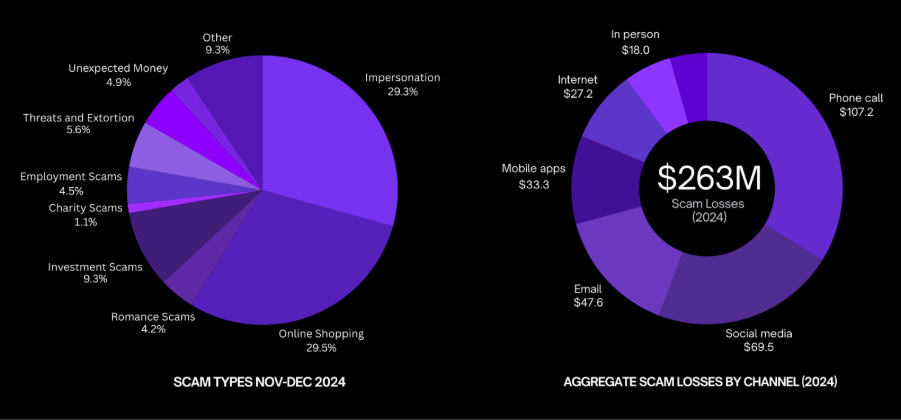
Understanding the Numbers: All dollar figures in this report are based on official Scamwatch and ACCC data. These represent only the losses voluntarily reported by individuals and businesses. Actual scam losses are likely to be substantially higher, as many incidents go unreported due to shame, confusion, or limited recovery options.
Online Shopping Scams
Delivery Method: Web | Ads | SMS
How it Works
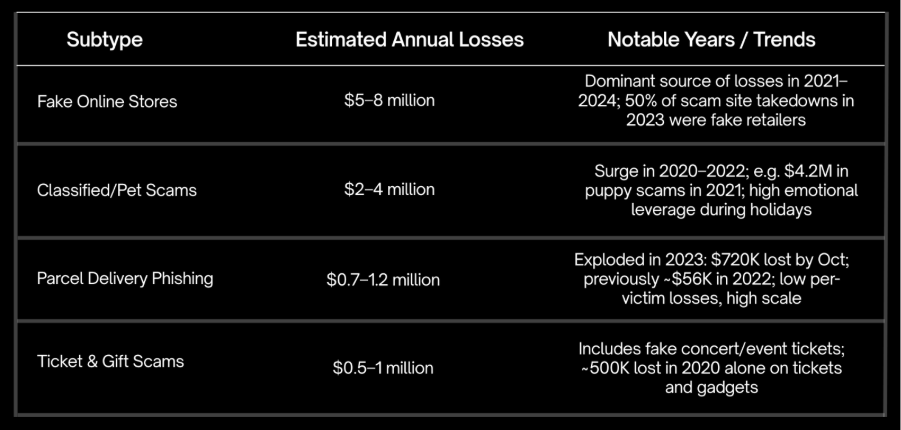
Fraudulent websites mimic real brands or offer “unmissable” discounts on high-demand products. Scammers use paid ads, hijacked domains, or social media promotions. Victims pay via card or bank transfer but receive nothing.
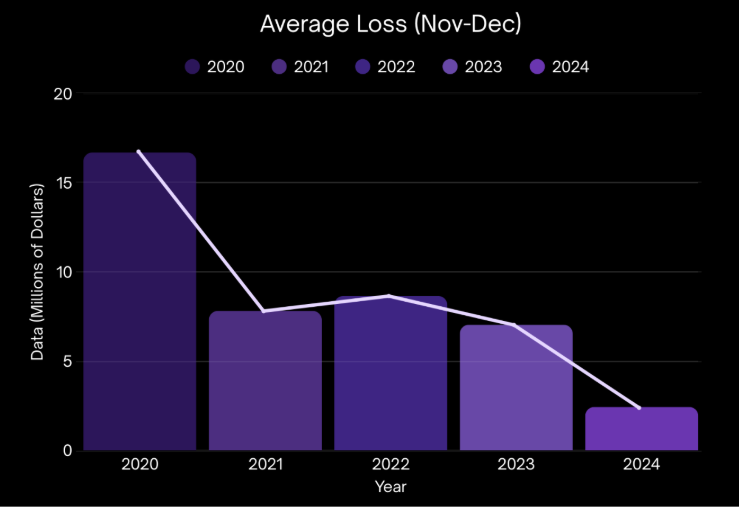
Source: Scamwatch, 2020-2024.
Why Now
Buyers are in a rush, chasing sales or shipping deadlines. Scammers know they’ll skip verification if pressured by time or fear of missing out.
Tactics to Watch
- Poorly written promotional SMS or emails with discount codes
- Sites with no contact number or broken refund policies
- Redirects to dodgy payment processors
- Brands slightly misspelled (e.g. `amaz0n-deals[.]com`)
Impersonation Scams
Delivery Method: SMS | Phone | Email
How it Works
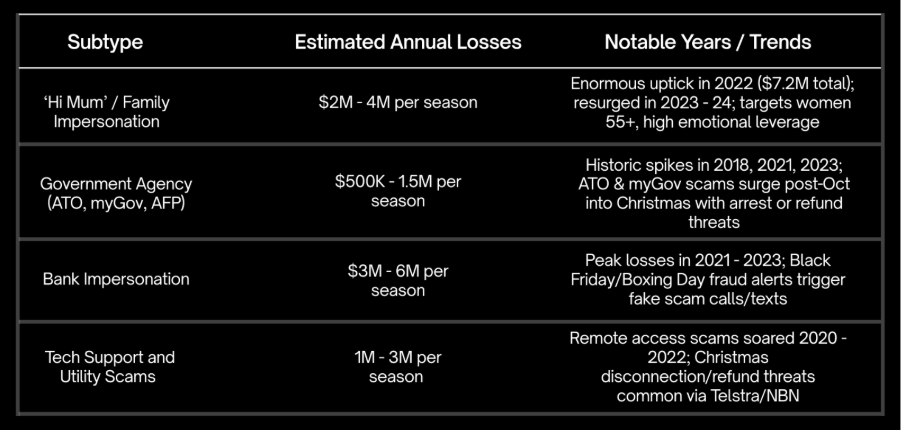
Scammers pose as banks, telcos, tax offices, or law enforcement agencies. They use spoofed caller IDs, text messages, or emails to request urgent account verification or payment. Some operate as call centres, targeting hundreds a day.
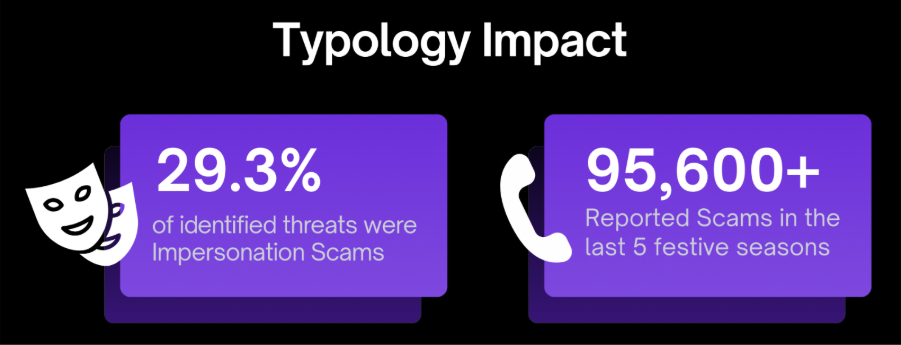
Source: Scamwatch Data, 2020-2024.
Why Now
People are distracted, off work, or more trusting during holidays. Scammers exploit stress and goodwill, especially around government rebates, overdue bills, or “compromised” accounts.
Tactics to Watch
- Calls from “Bank Fraud Teams” asking to move funds
- Fake tax refund notifications
- Threats of service disconnection (common with NBN, mobile)
- Requests to install remote access software
Charity Scams
Delivery Method: SMS | WhatsApp | Email
How it Works
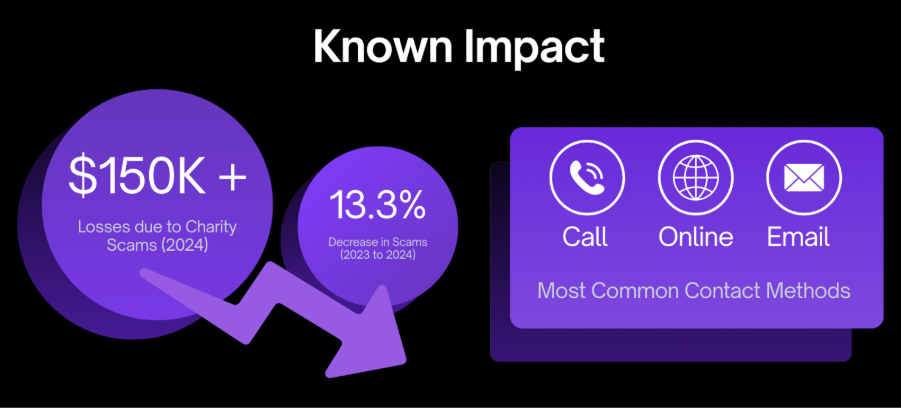
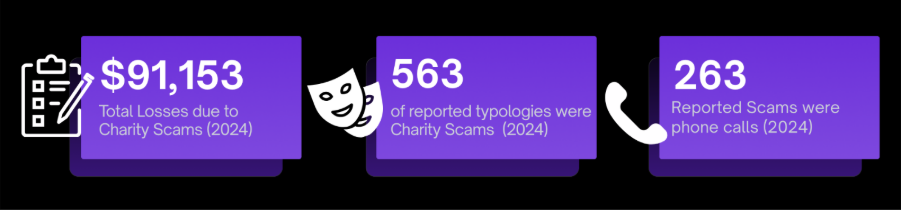
Scammers pose as charities collecting for disasters, humanitarian, or festive causes. Sites often mimic real charities and simulate legitimacy using logos, emails, and social media pages that reinforce their false narrative.
Source: Scamwatch Data, 2023-2024.
Why Now
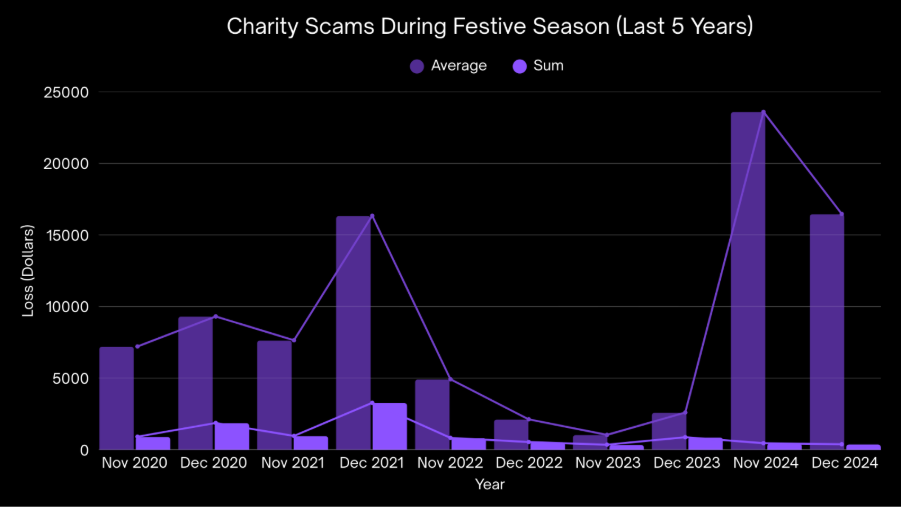
Donor generosity peaks in November-December during the festive season. Urgency and goodwill override caution, providing opportunity to scammers.
Source: Scamwatch Data, 2020-2024.
Reasoning
While no specific studies further explain the steep climb in average and total financial loss by scams between 2023 and 2024, this resurgence post-2020 spike is likely driven by the growing industrialisation of scams. The weaponisation of AI is directly increasing the sophistication of online scams, leading to an upward trend in financial losses.
Source: Scamwatch Data, 2024.
Romance Scams
Delivery Method: Dating Apps | Social Media
How it Works
Scammers create fake profiles and build emotional connections over days or months. Once trust is established, they invent urgent personal needs such as medical bills, stranded travel, or business delays and ask for money. Victims are groomed to keep the relationship secret and ignore warnings from friends or banks.
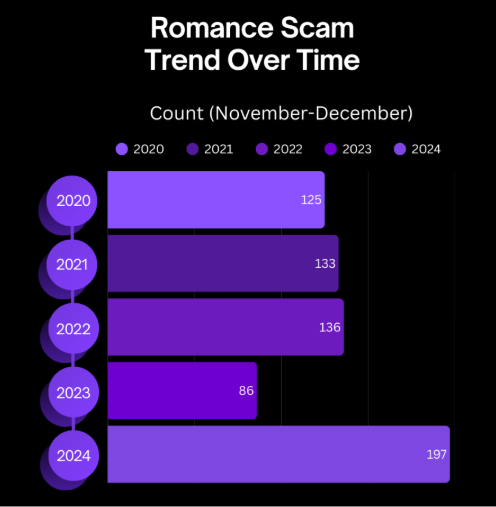
Source: Scamwatch, November-December,
2020-2024.
Why Now
The holiday period brings increased loneliness, grief, or relationship pressure, especially for older or recently separated individuals. Scammers exploit this vulnerability, using hope, flattery, and urgency to push for financial help around Christmas or New Year.
Crypto and Investment Scams
Delivery Method: Social Media | Phone | Email
How it Works
Scammers pitch high-return investment opportunities, often involving cryptocurrency, forex, or fake bonds. Victims are shown slick dashboards with fabricated profits and encouraged to invest more. Some receive small “withdrawals” to build trust before being locked out entirely. Others are manipulated into using crypto exchanges or PayID to bypass fraud checks.
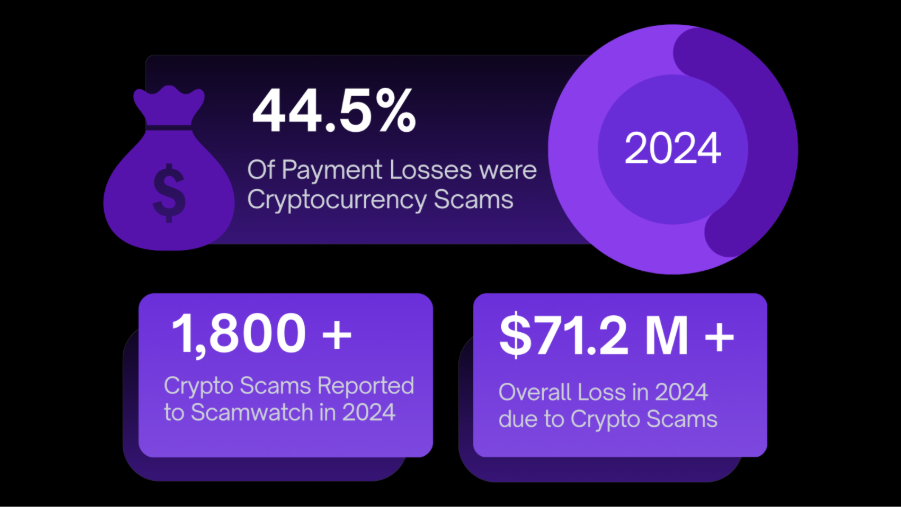
Source: NASC Targeting Scams Report, 2024.
Why Now
End-of-year bonuses, tax planning, and resolution-driven saving habits make people more receptive to investment offers. Scam ads spike in December and January, often using urgency (“closing soon”, “limited offer”) or fake endorsements from celebrities and business figures.
Travel Refund Scams
Delivery Method: Ads | Phone | Email
How it Works
Victims receive fake refund messages claiming to be from airlines, travel agents, or booking platforms. Scammers say a flight or hotel was overbooked or cancelled, then request personal details, card numbers, or “processing fees” to issue the refund. Some are directed to phishing sites that mimic legitimate airline portals.
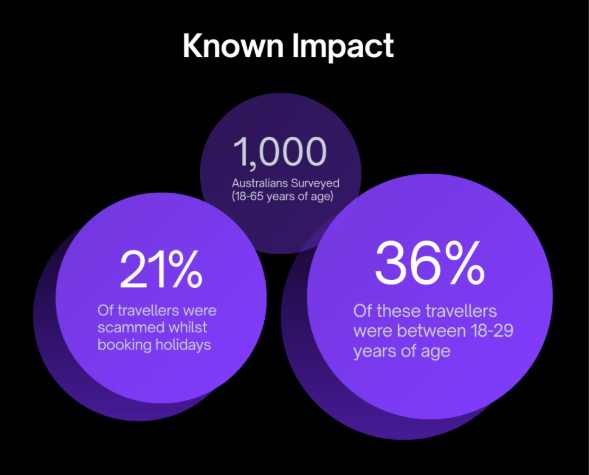
Source: MSI Research Study, 2024.
Why Now
Holiday travel disruptions make fake refund offers feel credible, especially when delays or cancellations are common. Scammers time campaigns for late December and early January, knowing many Australians are flying or managing bookings. The emotional pull of getting money back over the holidays lowers scepticism.
Lottery & Prize Scams
Delivery Method: Messaging Apps | Phone | Post
How it Works
Victims are told they’ve won a prize, entered a draw, or been selected for a reward, often from a fake lottery, survey, or giveaway. Scammers request personal details or upfront “release fees” to claim winnings. Some use branding from real promotions or known retailers to appear legitimate.
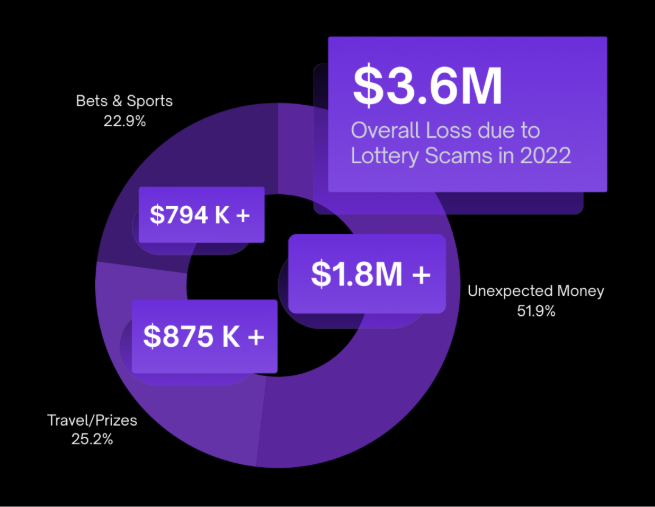
Source: ACCC Targeting Scams Report, 2022.
Why Now
Festive campaigns, retail competitions, and end-of-year draws make unsolicited win messages seem credible. Scammers exploit year-end optimism, gifting culture, and holiday promotions to pressure targets into acting quickly.
Marketplace Scams (Social Media)
Delivery Method: Ads | Phone | Email
How it Works
Scammers post fake listings on Facebook Marketplace, Gumtree, or similar platforms, often for in-demand tech, gifts, or tickets. Some hijack real accounts to appear trustworthy. Once payment is sent (via bank transfer or PayID), the seller vanishes or stalls with fake shipping updates.

Source: NASC Targeting Scams Report, 2024.
Why Now
Pre-Christmas demand spikes for second-hand gifts, discounted items, and last-minute buys. Buyers take more risks to secure a bargain quickly. Scammers exploit urgency, limited availability, and the false sense of safety on familiar platforms.
Fake Job Offers
Delivery Method: Messaging Apps | Job Boards | Email
How it Works
Victims are offered remote or casual jobs. Some are classic scams involving upfront fees for fake training or equipment. Others are more covert, recruiting people as money mules and asking them to “process payments” or “transfer funds” on behalf of fake companies.
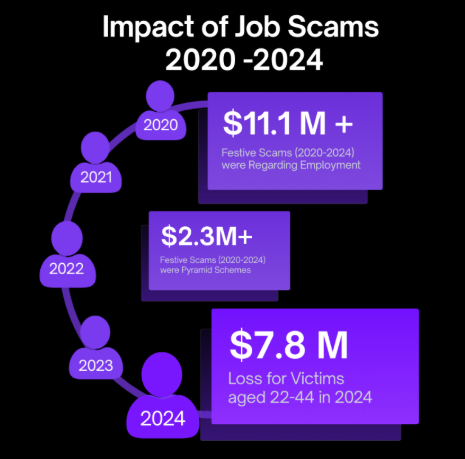
Source: Scamwatch Data, November-December,
2020-2024.
Why Now
Holiday spending peaks and people seek side income or flexible work before year-end. Scammers exploit this window with job ads that feel urgent, legitimate, and time-limited, particularly on social media and job boards.
Apate Scam Disruption: Impact at Scale
To date, Apate.ai’s scam disruption platform has engaged scammers across hundreds of thousands of conversations, diverting threats away from victims and generating real-time intelligence for our partners. These outcomes show the scale and impact of disruption when intelligence is operationalised.
Let’s work together.
We work closely with each client to understand their unique requirements and provide a solution that fits. Reach out for a personalised consultation and to explore how our technology can transform your scam prevention and intelligence strategy.